How Much Does a Concrete Patio Cost in Clark County? 2026 Pricing Guide
If you are planning a backyard upgrade, one of the first questions you may ask is simple: how much does a concrete patio cost in Clark County?
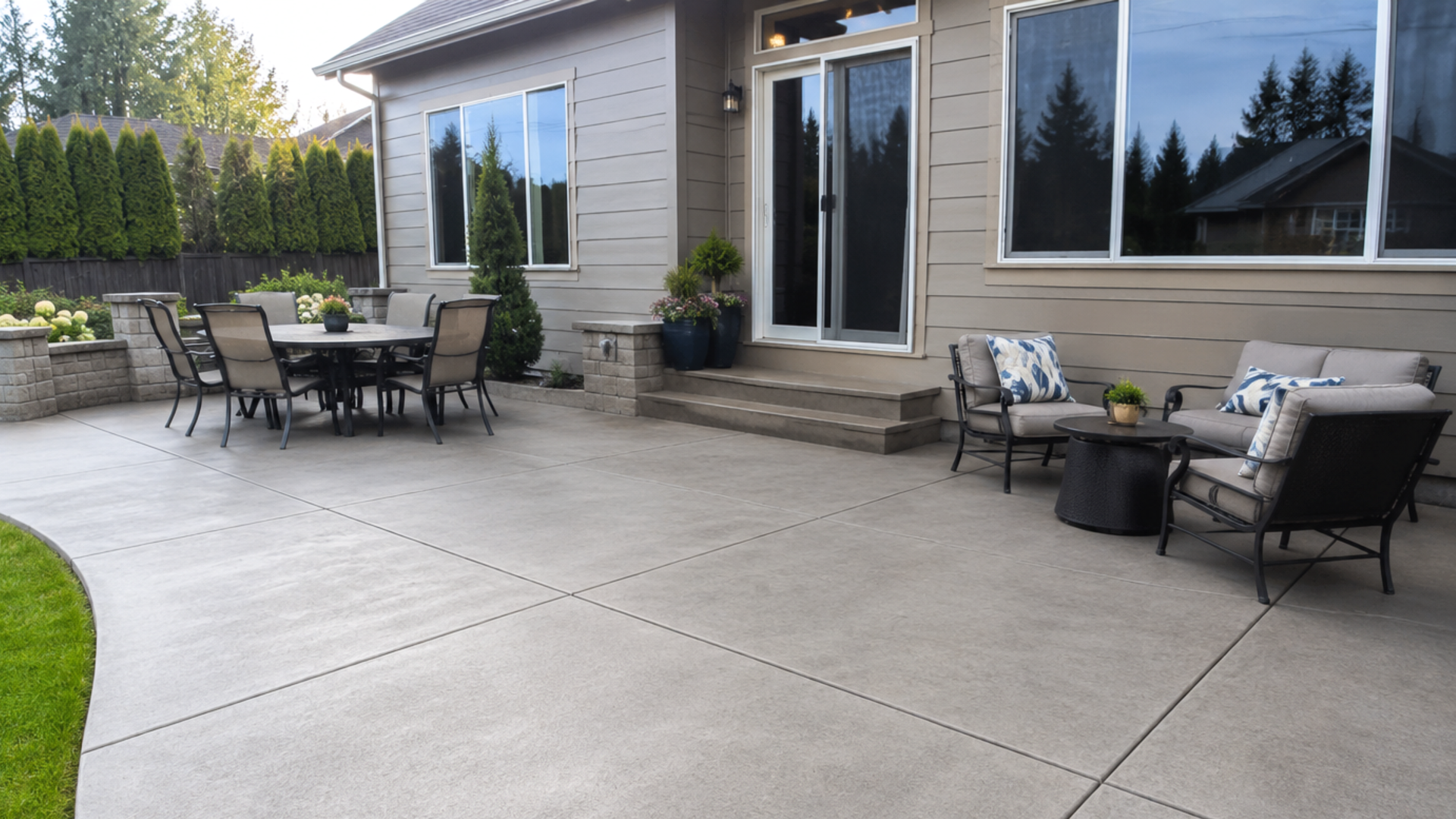
The answer depends on the size of your patio, the finish you choose, the condition of your yard, and how much preparation is needed before concrete is poured. A basic concrete patio will usually cost less than stamped or decorative concrete, but the lowest price is not always the best long-term value. Site preparation, drainage, thickness, reinforcement, and finishing quality all play a major role in how the patio performs over time.
This guide breaks down what homeowners in Clark County should know before budgeting for a concrete patio. We will cover average cost ranges, finish options, design factors, installation timelines, maintenance needs, and the biggest mistakes to avoid before hiring a contractor.
Average Concrete Patio Cost in Clark County
Most concrete patios in Clark County can range from a few thousand dollars for a smaller, basic patio to much more for a larger decorative outdoor living area. National patio cost data often shows a wide range because every project is different. In a local market like Clark County, pricing depends heavily on access, grading, finish type, concrete thickness, and whether the project requires excavation or removal of old concrete.
Here is a general planning range homeowners can use:
| Patio Type | Estimated Cost Per Square Foot | Best For |
|---|---|---|
| Basic Broom Finish Patio | $10 to $18 | Simple backyard patios and functional outdoor areas |
| Smooth or Light Texture Patio | $12 to $20 | Cleaner appearance with a refined finish |
| Colored Concrete Patio | $15 to $25 | Homeowners who want a warmer or more custom look |
| Stamped Concrete Patio | $18 to $35+ | Decorative patios that resemble stone, slate, or pavers |
| Larger Custom Patio With Site Work | $20 to $40+ | Properties needing grading, excavation, drainage, or complex layouts |
These numbers are planning estimates only. The most accurate way to understand your project cost is to have a contractor evaluate the property in person.
For a broader look at driveway and flatwork pricing, read Concrete Driveways in Clark County: Cost, Types, and What to Expect.
Why Patio Costs Vary So Much
Two patios with the same square footage can have very different prices. A 400-square-foot patio on a flat, easy-access backyard will not cost the same as a 400-square-foot patio that needs excavation, drainage correction, retaining work, or a stamped finish.
Several factors affect pricing.
Patio Size and Square Footage
Size is one of the biggest cost factors. Larger patios require more concrete, more labor, more base material, and more finishing time.
Common patio sizes include:
| Patio Size | Approximate Square Footage | Common Use |
|---|---|---|
| Small Patio | 100 to 200 sq ft | Grill area, small seating space, side yard patio |
| Medium Patio | 250 to 500 sq ft | Outdoor dining, seating area, family use |
| Large Patio | 600 to 1,000+ sq ft | Outdoor living space, fire pit area, entertainment space |
| Custom Patio | Varies | Multi-zone layouts, walkways, steps, borders, or decorative finishes |
A larger patio may sometimes have a lower cost per square foot than a very small patio because equipment, delivery, setup, and labor still have fixed costs. Small projects can carry minimum charges, especially if they require a full crew and concrete delivery.
Finish Type
The finish has a major impact on cost. A basic broom finish is typically the most affordable. Decorative options cost more because they require additional labor, detail work, color, sealing, and more controlled finishing.
Broom Finish Concrete Patio
A broom finish is one of the most common patio finishes. It is created by pulling a broom across the concrete surface before it fully sets, leaving a subtle texture.
This is a practical option for homeowners who want a clean, simple patio without decorative upgrades.
Best for:
- Standard backyard patios
- Functional outdoor spaces
- Budget-conscious projects
- Areas where slip resistance matters
Smooth or Light Texture Concrete Patio
A smooth or lightly textured patio can create a cleaner appearance, especially for more modern homes. This option may require more careful finishing than a standard broom finish.
Best for:
- Modern outdoor spaces
- Covered patios
- Seating areas
- Homes with clean exterior design
Smooth finishes may not be ideal for every outdoor space, especially in areas exposed to frequent rain. Texture and traction should always be considered.
Stamped Concrete Patio
Stamped concrete is a decorative option that can resemble stone, slate, brick, tile, or pavers. It is one of the most popular choices for homeowners who want a more finished outdoor living area.
Stamped concrete usually costs more because the process includes pattern stamping, coloring, detail work, and sealing.
Best for:
- Decorative backyard patios
- Outdoor entertaining areas
- Higher-end homes
- Patios connected to landscaping or outdoor kitchens
Colored Concrete Patio
Colored concrete can help a patio blend with the home, landscaping, or surrounding hardscape. It can be used on its own or combined with stamped concrete.
Common color choices include:
- Warm gray
- Charcoal
- Tan
- Brown
- Soft earth tones
Color adds cost, but it can make the patio feel more intentional and custom.
Site Preparation and Excavation
Site preparation can make or break a patio project. Even the best concrete mix and finish will not perform well if the base is poorly prepared.
Preparation may include:
- Removing grass, soil, or old concrete
- Excavating to the proper depth
- Installing and compacting base material
- Adjusting slope
- Planning drainage
- Setting forms
- Preparing reinforcement
If your yard is uneven, soft, sloped, or difficult to access, the project may require more labor and equipment.
Drainage and Slope
In Clark County, drainage should be planned carefully because outdoor concrete needs to move water away from the home and away from areas where pooling can occur.
A patio should be sloped properly so water does not sit against the foundation, collect near doors, or drain toward areas that cause erosion. Drainage planning may add cost upfront, but it helps prevent long-term problems.
Poor drainage can lead to:
- Standing water
- Soil movement
- Cracking
- Settlement
- Water near the foundation
- Slippery surfaces
A good contractor will evaluate how water currently moves through the property before recommending a patio layout.
Patio Thickness and Reinforcement
Most residential concrete patios are commonly installed around 4 inches thick, depending on use and site conditions. Some patios may need additional thickness or reinforcement based on the property and how the space will be used.
A patio designed only for seating does not need the same approach as an area that may support a hot tub, outdoor kitchen, covered structure, or heavy equipment.
Common reinforcement options include:
| Reinforcement Type | Purpose |
|---|---|
| Wire Mesh | Helps control cracking |
| Rebar | Adds strength for heavier use or larger slabs |
| Fiber Reinforcement | Helps improve durability throughout the concrete mix |
| Thicker Concrete | Supports heavier loads or special use areas |
If you plan to add a pergola, roof cover, outdoor kitchen, or hot tub, tell your contractor early. Those features may require different preparation, footings, or structural support.
Concrete Patio Cost by Project Type
Different patio projects come with different planning needs. Here are common project types and what usually affects cost.
| Project Type | Cost Factors |
|---|---|
| New Backyard Patio | Size, access, finish, grading, base preparation |
| Patio Replacement | Demolition, hauling, prep work, new finish |
| Stamped Patio | Pattern, color, sealing, detail work |
| Patio Extension | Matching existing concrete, layout, drainage |
| Covered Patio Slab | Footings, thickness, structure support, layout |
| Outdoor Living Patio | Multi-zone layout, walkways, steps, decorative details |
Concrete Patio vs Pavers
Many homeowners compare poured concrete patios with pavers before choosing a material. Both can work well, but they have different cost, maintenance, and design considerations.
| Feature | Concrete Patio | Paver Patio |
|---|---|---|
| Upfront Cost | Often lower than pavers | Often higher due to labor |
| Appearance | Clean, customizable with finishes | Individual stone or block look |
| Maintenance | Lower with proper sealing and cleaning | May need joint sand and weed control |
| Repairs | Repairs may be more visible | Individual pavers can be replaced |
| Design Options | Broom, smooth, colored, stamped, exposed aggregate | Many shapes, colors, and patterns |
| Installation Time | Often faster | Usually more labor-intensive |
Stamped concrete can be a strong middle ground for homeowners who want a decorative look without choosing individual pavers.
Concrete Patio vs Wood Deck
A deck may be a good option for elevated areas, but for ground-level outdoor living spaces, a concrete patio is often a practical choice.
| Feature | Concrete Patio | Wood Deck |
|---|---|---|
| Maintenance | Low to moderate | Higher due to staining or sealing |
| Ground-Level Use | Excellent | May require framing |
| Longevity | Strong with proper installation | Depends on material and upkeep |
| Design Flexibility | Good with shape and finish options | Good for raised spaces |
| Cost | Varies by finish and site prep | Varies by lumber, framing, and railings |
For many homeowners, the decision comes down to yard layout, desired appearance, maintenance expectations, and how the outdoor space will be used.
Best Concrete Patio Finishes for Clark County Homes
The best patio finish depends on your goals, budget, and the style of your home.
Best Budget-Friendly Finish
A broom finish is usually the most cost-effective option. It provides texture, works well outdoors, and fits many residential properties.
Best Decorative Finish
Stamped concrete is best for homeowners who want a patio that feels more designed and visually connected to the home or landscaping.
Best Low-Maintenance Finish
A standard broom finish or simple colored concrete patio usually requires less decorative maintenance than stamped concrete.
Best Finish for Outdoor Entertaining
Stamped or colored concrete can make a patio feel more like an outdoor living area rather than a basic slab.
Common Patio Add-Ons That Affect Cost
Some features improve the patio but increase the total investment.
Common add-ons include:
- Stamped borders
- Integral color
- Decorative saw cuts
- Steps
- Walkways
- Patio extensions
- Drainage improvements
- Fire pit areas
- Outdoor kitchen slabs
- Seat wall or retaining wall integration
- Extra thickness for hot tubs or structures
These details should be planned before installation begins. Adding them later can be more difficult and expensive.
How Long Does Concrete Patio Installation Take?
Most concrete patio projects take several days, depending on size, site conditions, weather, and finish type.
| Project Phase | Typical Timeline |
|---|---|
| Estimate and Planning | 1 to 3 days |
| Scheduling | Varies by season |
| Site Preparation | 1 to 2 days |
| Forming and Reinforcement | 1 day |
| Pouring and Finishing | 1 day |
| Initial Cure Time | 24 to 48 hours |
| Light Use | Usually after a few days |
| Full Cure | About 28 days |
Stamped concrete can take longer than a standard broom finish patio because the finish requires more detail and sealing.
When Is the Best Time to Install a Concrete Patio?
Spring, summer, and early fall are common times for patio installation in Clark County. However, scheduling depends on weather, contractor availability, and site conditions.
Homeowners should start planning before the season is fully booked. If you want your patio ready for summer use, it is smart to begin the estimate and design process earlier in the year.
How to Budget for a Concrete Patio
Before requesting an estimate, it helps to think through your goals.
Ask yourself:
- How large does the patio need to be?
- Will it be used for dining, seating, grilling, or entertaining?
- Do you want a basic finish or decorative concrete?
- Does the yard need grading or drainage work?
- Will the patio connect to walkways, steps, or a driveway?
- Do you plan to add a pergola, hot tub, or outdoor kitchen later?
- Are you replacing old concrete?
The more clearly you understand your goals, the easier it is for a contractor to provide useful recommendations.
Mistakes Homeowners Should Avoid
A patio may look simple from the surface, but the details underneath matter.
Choosing Only Based on the Lowest Price
A low estimate may leave out important preparation, reinforcement, drainage, or cleanup. Always compare what is included, not just the final number.
Ignoring Drainage
A flat patio that holds water can become frustrating fast. Water should move away from the home and off the surface correctly.
Making the Patio Too Small
Many homeowners regret not adding more space. Patio furniture, grills, walkways, and seating need more room than expected.
Not Planning for Future Features
If you want a hot tub, pergola, cover, fire pit, or outdoor kitchen later, mention it before the patio is installed.
Choosing the Wrong Finish
Decorative concrete looks great, but it may require more maintenance. A standard finish may be better for some properties. The right choice depends on use, style, and budget.
How to Maintain a Concrete Patio
Maintenance helps protect your investment and keep the patio looking clean.
Basic patio maintenance includes:
- Sweep regularly
- Rinse off dirt and debris
- Clean spills early
- Avoid harsh chemicals
- Reseal decorative concrete as recommended
- Keep heavy sharp objects from dragging across the surface
- Address small cracks before they spread
Stamped and colored concrete usually need more maintenance than standard broom finish concrete because sealing helps protect the surface appearance.
Is a Concrete Patio Worth It?
For many Clark County homeowners, a concrete patio is a worthwhile investment because it adds usable outdoor space, improves the look of the backyard, and creates a stable surface for everyday living.
A well-planned patio can support:
- Outdoor dining
- Family gatherings
- Grilling areas
- Fire pit seating
- Covered outdoor spaces
- Walkways and yard access
- Future landscape improvements
The key is choosing the right size, finish, and contractor for your property.
How to Choose a Concrete Patio Contractor in Clark County
The contractor you choose has a direct impact on the final result. Good patio work starts before concrete arrives.
Look for a contractor who discusses:
- Site preparation
- Drainage
- Base material
- Patio thickness
- Reinforcement
- Finish options
- Timeline
- Access
- Cleanup
- Warranty or workmanship coverage
A professional estimate should help you understand the full scope of the project, not just the price.
Get a Concrete Patio Estimate in Clark County
A concrete patio can make your backyard more useful, comfortable, and enjoyable, but the right result starts with proper planning. Cost depends on the size of the patio, finish type, access, grading, drainage, and any decorative or structural details you want included.
Clark County Concrete installs concrete patios for homeowners throughout Vancouver, Camas, Battle Ground, Ridgefield, Washougal, La Center, and surrounding areas. Whether you want a simple broom finish patio or a more decorative stamped concrete outdoor living space, our team can help you review your options and plan the project around your property.
To get started, contact Clark County Concrete today to request an estimate for your concrete patio project.