Do You Need a Permit for Concrete Work in Vancouver, WA?
Planning a driveway upgrade, a new RV pad, or a custom patio in Clark County? Before you set your forms, it helps to know when concrete work needs a permit in Vancouver, WA. Getting this right protects you from project delays, stop-work orders, and compliance headaches down the line. The short version: some concrete projects need a permit and some do not, and the answer depends on what you are building and exactly where your property sits.

This guide breaks down when a concrete permit in Vancouver is required, how the rules differ between the City of Vancouver and unincorporated Clark County, and why the public right-of-way is the part that trips up the most homeowners. It also explains how a licensed contractor handles the permitting so you do not have to.
Most residential concrete falls into a few common categories, and the permit picture is different for each. The clearest way to think about it is to split projects into two groups: the ones that need a permit and the ones that usually do not. Here is how the common concrete projects sort out.
Permit Requirements at a Glance
The table below summarizes the typical permit picture for common residential concrete projects in the Vancouver area. Always confirm specifics for your exact address, since rules vary by location and project.
| Project | Typical Permit Picture | Key Notes |
|---|---|---|
| Ground-level patio | Usually no building permit | Must meet setbacks; not on an easement |
| New or modified driveway | Permit required (city); often more than one | ROW permit needed for the approach; must use a licensed, approved contractor |
| New RV pad | Permit required in the City of Vancouver | Treated like driveway work in the City of Vancouver |
| Work in the right-of-way (approach, curb) | ROW permit always required | Issued only to an approved licensed contractor |
| Large project (2,000+ sq ft hard surface) | May trigger stormwater requirements (county) | Applies to bigger jobs, not typical single patios or driveways |
Concrete Projects That Need a Permit
In general, if your project touches the public right-of-way or changes vehicle access to your property, expect to need a permit, and often more than one. These are the projects where homeowners most often get caught off guard.
New or Modified Driveways
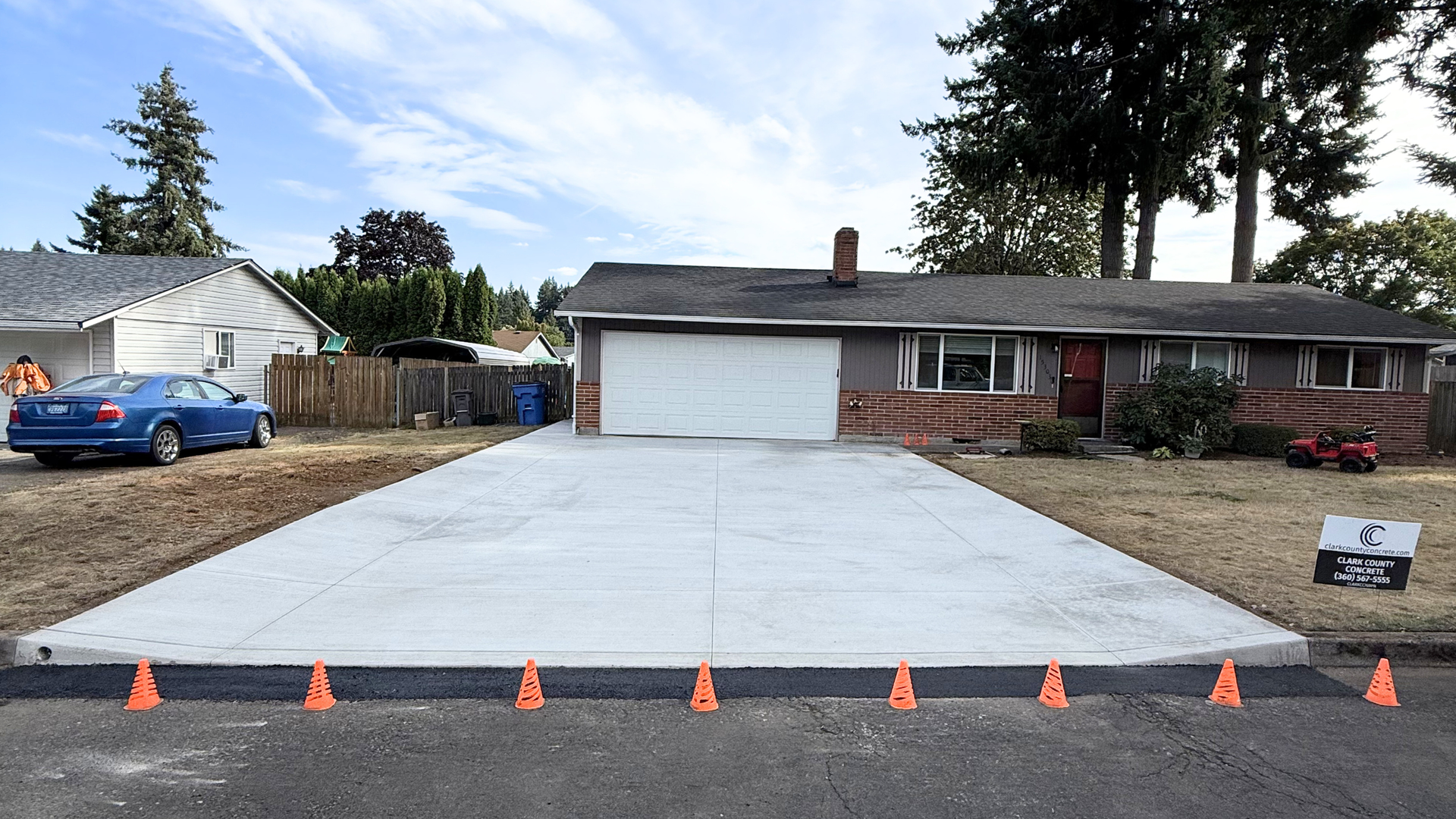
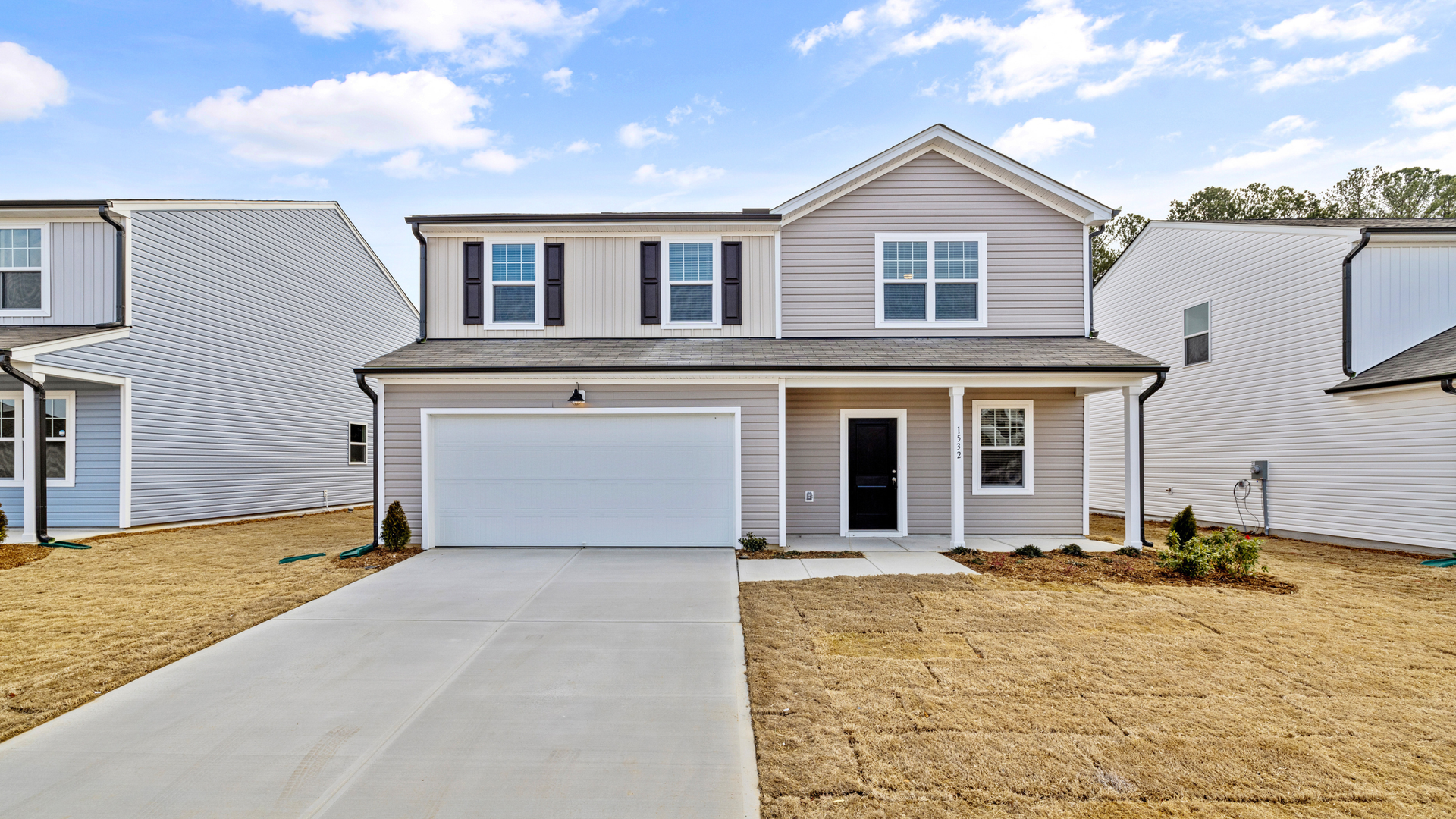
A driveway is the big one, especially in the city. In the City of Vancouver, modifying a driveway, adding a second driveway, or widening an existing one always requires a permit. In many cases it requires more than one, because the work usually spans both your private property and the public right-of-way where the driveway meets the street. Work on your own land may require an Over-the-Counter (OTC) permit, while the approach at the street requires a separate Right-of-Way permit. Because of that split, a new or widened driveway is a job for a professional concrete driveway installation crew rather than a weekend project.
New RV Pads
Adding a new RV pad is treated much like driveway work in the City of Vancouver, and it always requires a permit. Since an RV pad typically involves new vehicle access and a fresh area of hard surface, the same private-property and right-of-way considerations apply. If the pad connects to the street, plan on the right-of-way portion just as you would for a driveway.
Any Work in the Public Right-of-Way
This is the distinction that matters most, and the one that surprises the most homeowners. Your property line is not always where the "public" part of your lot ends. The strip between the street and your property line, including the driveway approach, the curb, and the sidewalk, is public right-of-way, and any work there requires a Right-of-Way (ROW) permit, without exception. The ROW permit carries one important condition: it must be issued to a licensed contractor who is approved to work in the City of Vancouver right-of-way. In other words, a homeowner generally cannot pull a right-of-way permit and do that portion themselves, which is another reason this work belongs with a professional crew.
Concrete Projects That Usually Don't Need a Permit
On the other side, a lot of common residential concrete is generally exempt from a building permit. Exempt does not mean unrestricted, though. Setbacks, easements, and other placement rules still apply, so it is worth understanding the limits even for a permit-free project.
Ground-Level Patios
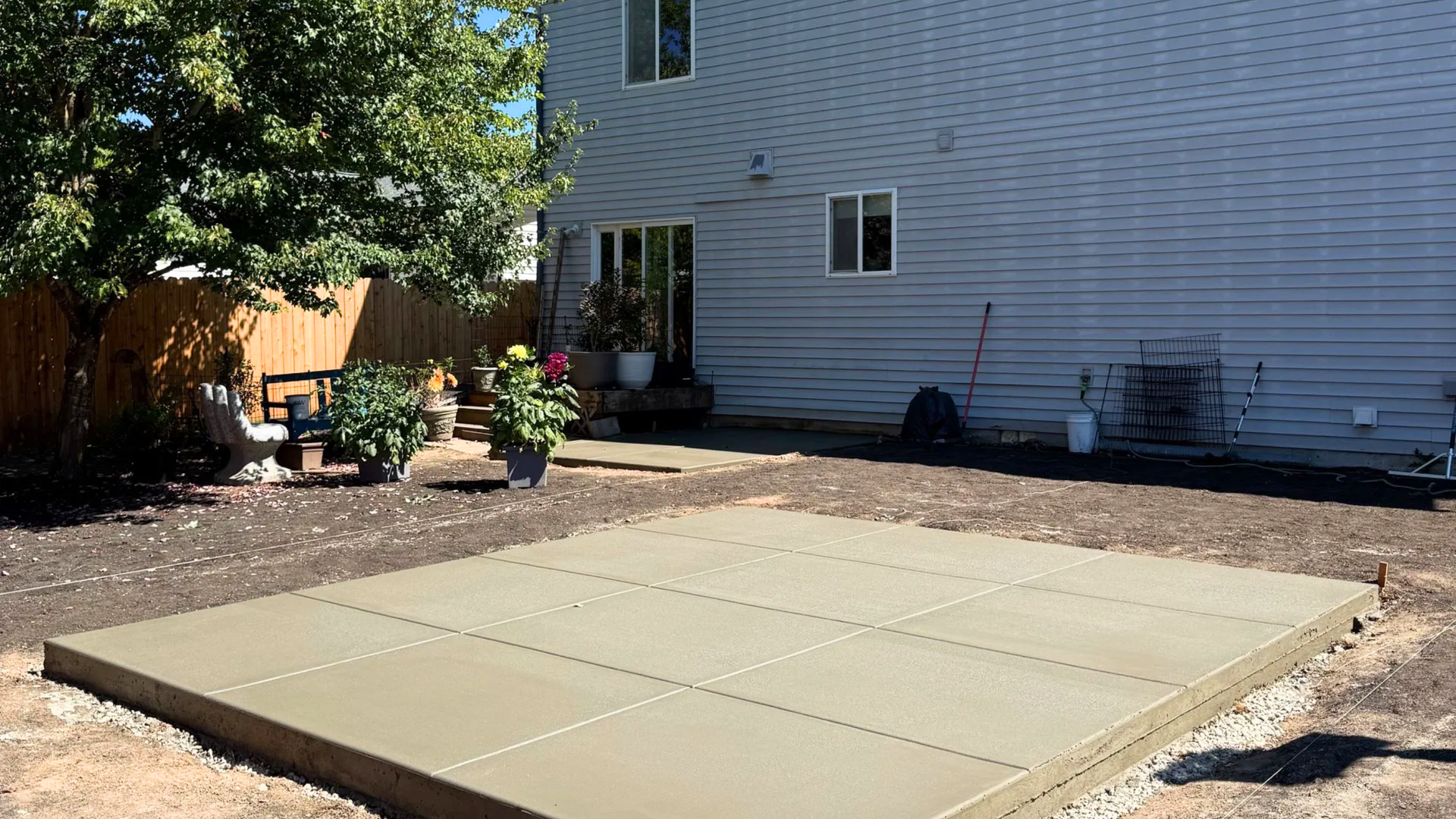
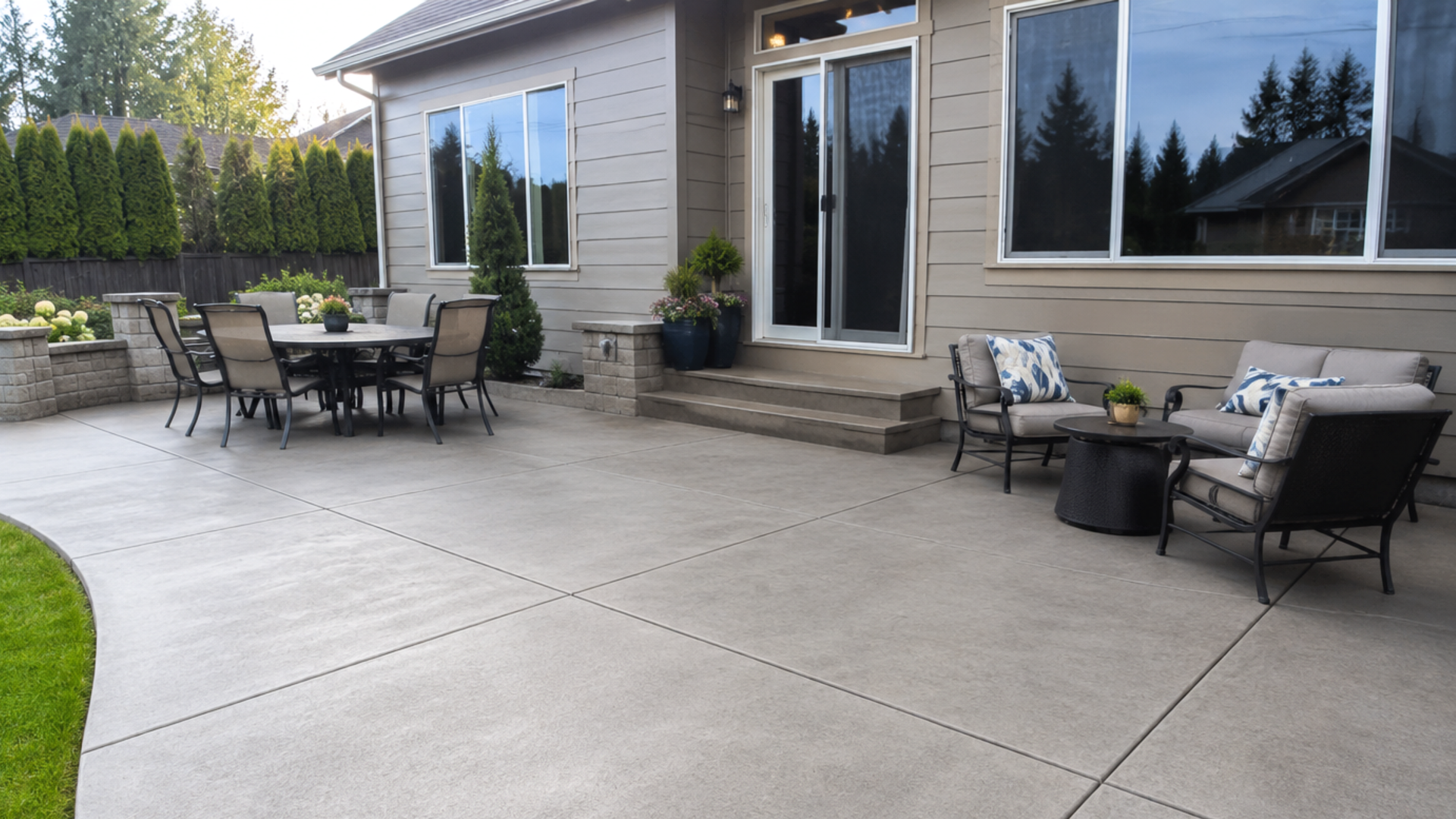
A backyard patio poured at ground grade usually does not need a building permit, in both the City of Vancouver and across Washington. This is the most common permit-free concrete project. The catch is placement: the patio still has to respect property setbacks and cannot be built on an easement. So while you likely will not pull a building permit to install concrete patios in your backyard, the placement rules still apply and are worth confirming before you set forms.
At-Grade Slabs and Flatwork
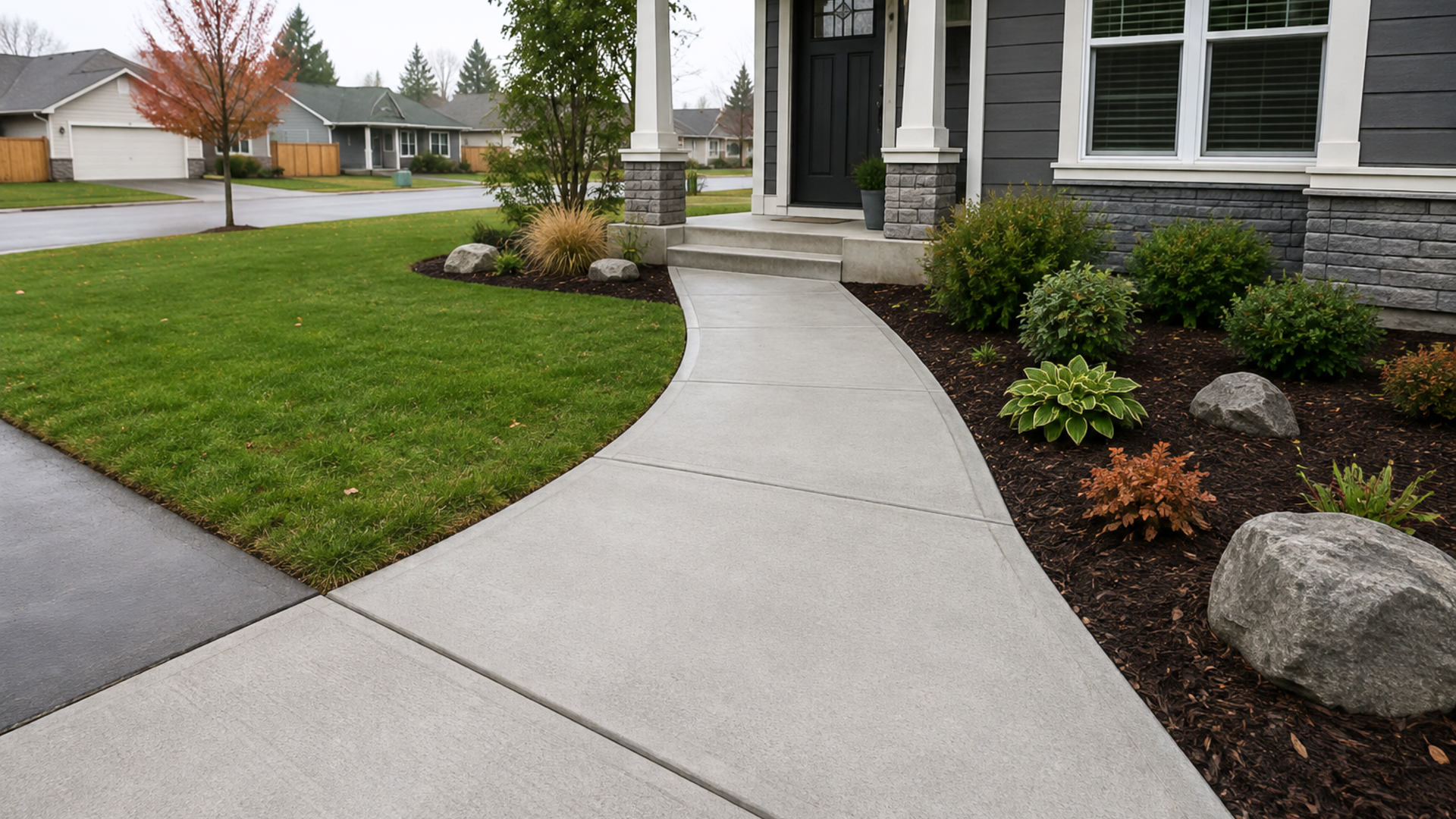
Other at-grade flatwork, such as walkways, ground-level slabs, and similar surfaces, generally falls under the same exemption as patios. Concrete and paver slabs installed at grade are typically exempt from building permits statewide. As with patios, the surface cannot sit on an easement and must respect setbacks, but for most simple flatwork you will not be pulling a building permit.
Replacing Existing Flatwork in the Same Footprint
Replacing a patio or slab within its existing footprint, meaning the same size and same location, is usually the most straightforward case of all. You are not adding new hard surface or changing access, so a like-for-like replacement of at-grade flatwork typically does not require a building permit. The one thing to watch is scope: if the replacement grows the surface substantially or moves it, it can shift into a different category, which is where the size-based rules discussed below come in.
City of Vancouver vs. Unincorporated Clark County
Not every address in the Vancouver area is inside the City of Vancouver. Many homes sit in unincorporated Clark County, and the permitting authority is different depending on which side of that line you are on. This is one of the most common points of confusion, and getting it wrong can send you to the wrong office.
If your property is inside the city, your work goes through the City of Vancouver Permit Center. If your property is in unincorporated Clark County, it goes through Clark County Community Development. The rules are similar in spirit, but the specific requirements, forms, and thresholds are not identical. In unincorporated Clark County, ground-grade patios and concrete slabs are likewise generally exempt from a building permit, and, as in the city, they cannot be placed on an easement.
If you are not certain which jurisdiction you are in, that is the very first thing to pin down, because it determines every step that follows. A local contractor who works across both the city and the county every week will know immediately which process applies to your address.
What About Stormwater and Impervious Surface Rules?
You may have heard that adding hard surface to your lot can trigger stormwater requirements. That is true, but for most homeowners it is not the hurdle it sounds like.
In unincorporated Clark County, stormwater minimum requirements kick in when a project creates or adds 2,000 square feet or more of new and replaced impervious surface, or disturbs 7,000 square feet or more of land. Impervious surface includes patios, driveways, and similar hard surfaces. The key point is the size. A typical residential patio or driveway is usually well under 2,000 square feet, so most everyday concrete projects do not trip the stormwater threshold at all.
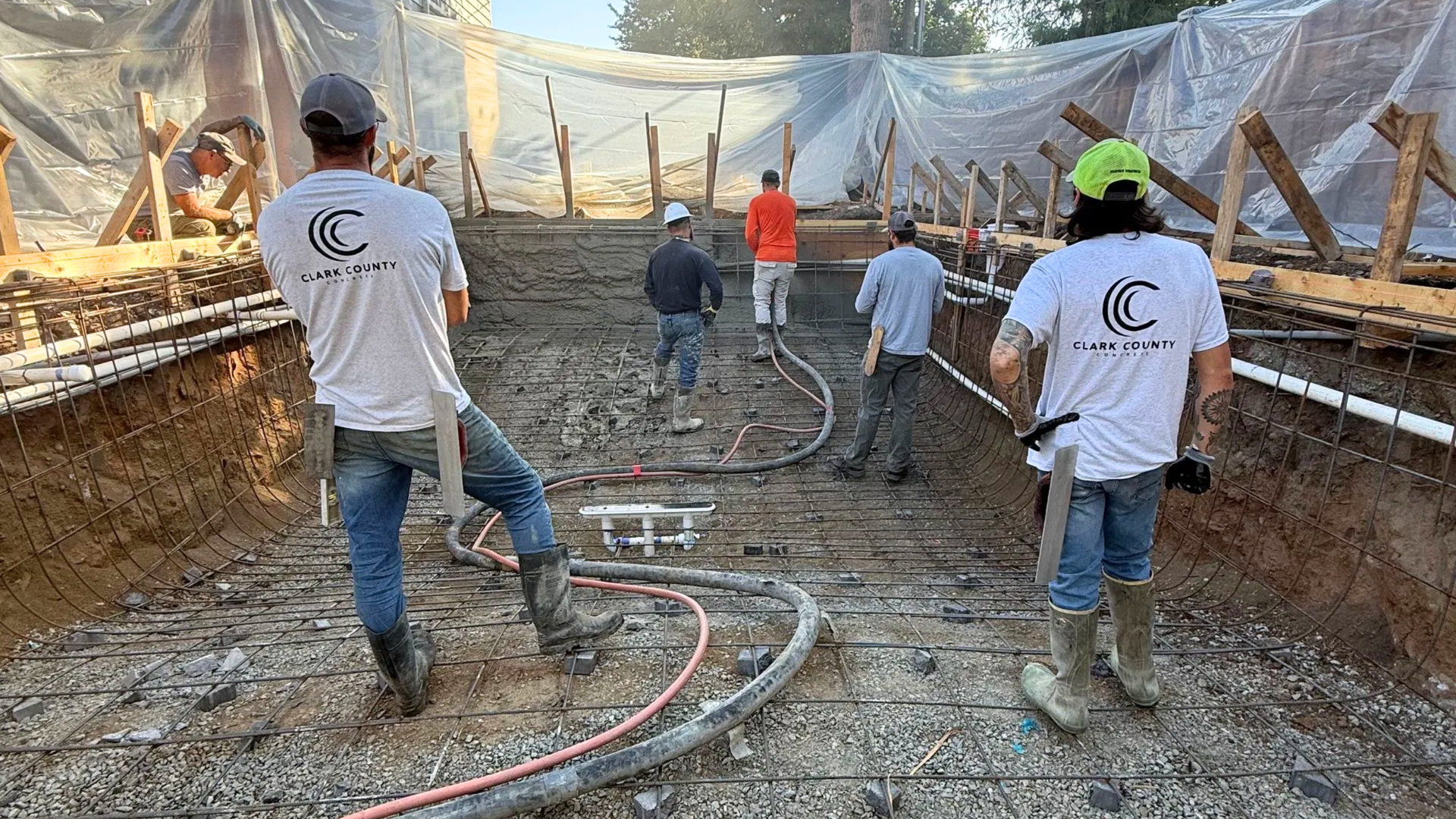
Where it does come into play is on larger jobs: a big new driveway combined with a wide parking pad, an extensive patio system, or a project that also involves significant grading and excavation. If your plans are ambitious enough to approach those numbers, stormwater handling becomes part of the design, and thoughtful excavation and site preparation is where that gets managed. For most single projects, though, this is a box that simply does not apply.
Why Permits Are Worth Taking Seriously
It can be tempting to treat permits as red tape, especially for a project that feels straightforward. But skipping a required permit creates real risk. Unpermitted work in the right-of-way can lead to a stop-work order partway through your project, which is both costly and frustrating. It can also create problems later, when you sell your home and an inspection or title review turns up work that was never properly permitted.
There is a safety and quality angle too. Right-of-way rules exist partly to protect sight lines at the street, proper drainage, and the integrity of public sidewalks and curbs. A driveway approach that ignores those standards can create genuine hazards. Permitting is the mechanism that keeps your project aligned with those requirements, which ultimately protects your investment.

How a Contractor Handles the Permitting for You
The good news for homeowners is that you do not have to navigate any of this alone. Handling permits is a routine part of what a professional concrete contractor does, and for right-of-way work, it is required to be.
A qualified local contractor will identify which jurisdiction your property falls under, determine which permits your specific project needs, prepare the simple site plan that the permit request requires, and, for right-of-way work, apply as the licensed and approved contractor. That last point is not optional in the City of Vancouver, since the ROW permit can only be issued to an approved contractor. Working with an experienced team means the paperwork, the approvals, and the code compliance are handled correctly from the start.
Once the permitting path is clear, the rest of project planning falls into place, including timing the pour for the right season. Our guide on the best time to pour concrete in Washington covers how to schedule the actual work for the best results once approvals are in hand.
What the Permit Process Actually Looks Like
For homeowners who have never pulled a permit, the process can sound more intimidating than it is. Knowing the basic shape of it helps you plan and shows why an experienced contractor makes it simple.
It starts with a site plan. Most residential concrete permit requests ask for a simple site plan showing the existing conditions and the proposed work: where the driveway or pad sits, its dimensions, and how it relates to the street and property lines. This does not have to be an engineered drawing for a straightforward project, but it does need to be clear and accurate.
Next comes the review. A planner reviews the site plan, confirms the project meets the applicable standards, and determines exactly which permits are needed. For driveway work, this is also where the city confirms whether a separate right-of-way permit is required for the approach, which it almost always is.
Then there are fees and issuance. Once the review is complete, the permit fees are calculated and the permit is issued. In the City of Vancouver, right-of-way permits are tied to the approved contractor performing the work, which is another reason the contractor typically manages this step directly.
Finally, the work is inspected. Permitted work is subject to inspection to confirm it was built to the approved plan and to code. This is a protection for you, since it verifies the finished project meets the standards that keep it safe and durable.
An experienced local crew moves through these steps routinely. Rather than you learning the system for a single project, the contractor who builds driveways and patios across Vancouver and Clark County every week already knows the forms, the reviewers, and the requirements.
Frequently Asked Questions
Do you need a permit for a concrete patio in Vancouver, WA?
Usually not a building permit. A ground-level concrete patio is generally exempt from a building permit in both the City of Vancouver and unincorporated Clark County. However, it still must meet property setbacks and cannot be built on an easement. If the patio is part of a larger project or unusually large, other requirements can apply, so it is worth confirming your specific plan before you start.
Do you need a permit to pour a concrete driveway in Vancouver?
In the City of Vancouver, yes. Modifying a driveway, adding a second driveway, or adding a new RV pad always requires a permit, and often more than one. Work on your private property may need an Over-the-Counter permit, while the driveway approach in the public right-of-way requires a separate Right-of-Way permit that must be pulled by a licensed, approved contractor.
What is a right-of-way permit and why does it matter?
The right-of-way is the public strip between the street and your property line, including the driveway approach, curb, and sidewalk. Any work in that area requires a Right-of-Way permit from the City of Vancouver. It matters because this permit can only be issued to a licensed contractor approved to work in the city right-of-way, so this portion of a driveway project cannot be done by the homeowner.
Are the rules different in Clark County versus the City of Vancouver?
Yes. Properties inside the City of Vancouver go through the City of Vancouver Permit Center, while properties in unincorporated Clark County go through Clark County Community Development. The requirements are similar in spirit but not identical, so the first step is confirming which jurisdiction your address falls under. A local contractor will know which process applies.
Will adding a patio or driveway trigger stormwater requirements?
For most homeowners, no. In unincorporated Clark County, stormwater minimum requirements generally apply when a project adds 2,000 square feet or more of new and replaced hard surface, or disturbs 7,000 square feet or more of land. A typical residential patio or driveway is well under that, so stormwater review usually applies only to larger projects.
Get Your Concrete Project Permitted and Done Right
So, do you need a permit for concrete work in Vancouver, WA? For a simple ground-level patio, often not, though setbacks and easements still apply. For a new or modified driveway or RV pad in the City of Vancouver, yes, and usually more than one, including a right-of-way permit that only a licensed, approved contractor can pull. And the rules differ depending on whether you are inside the city or in unincorporated Clark County.
The simplest way to get this right is to work with a local team that handles it every day. Clark County Concrete knows the City of Vancouver and Clark County processes, pulls the correct permits, and builds to code from the first form to the final pour. Request a free estimate and we will walk you through exactly what your project needs.