Site Prep Before a Slab or ADU in Vancouver, WA: A Checklist
A new shop slab or backyard ADU starts long before the concrete truck shows up. In Vancouver, WA, the first weeks are about paperwork, utility marks, access and dirt. Homeowners who plan site prep before concrete slab work begins avoid most of the delays and change orders we see on local jobs.
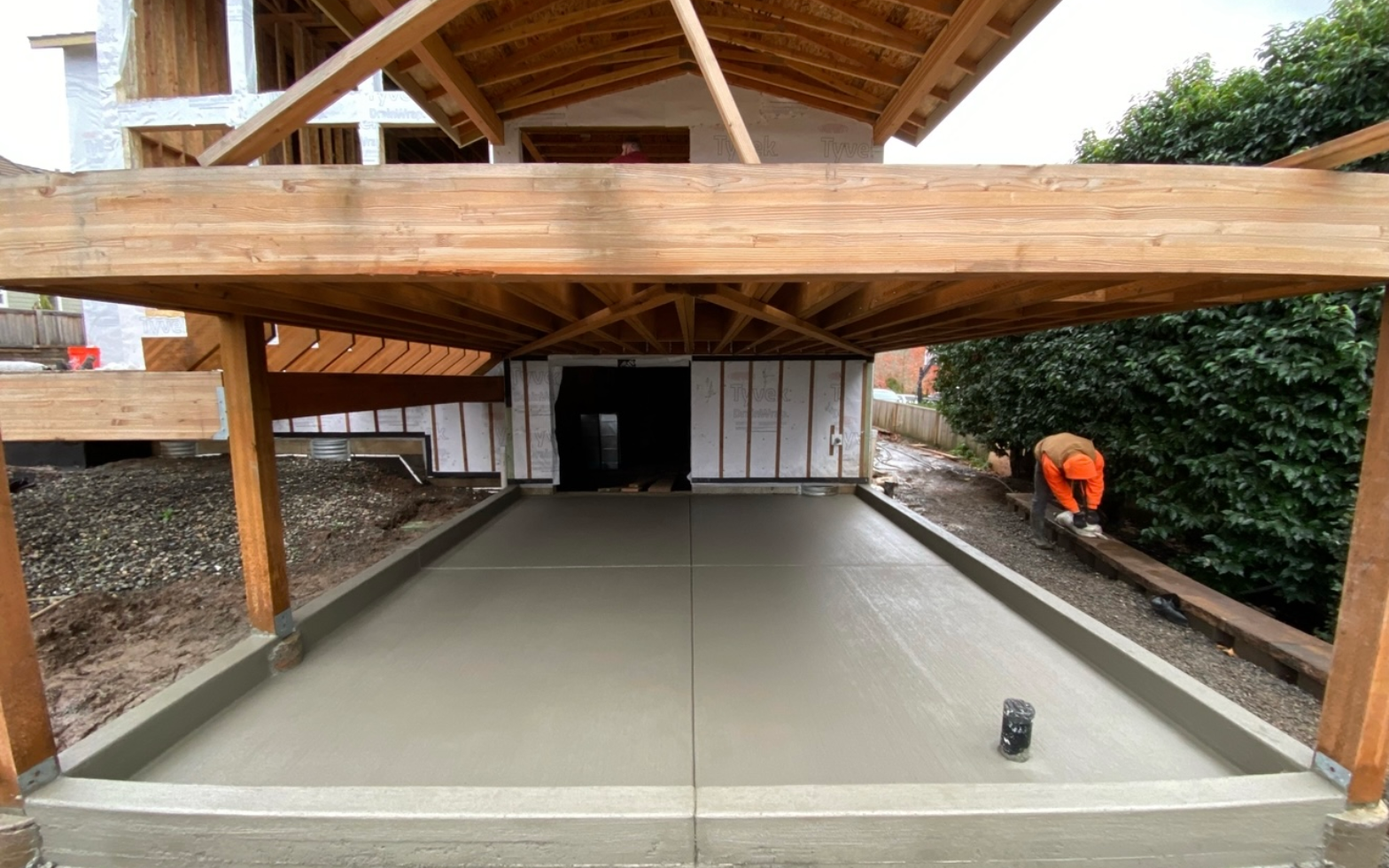
Timing matters right now. Fall and winter rain soak Clark County soils, and the county limits how long bare ground can sit open during the wet months. A project that is planned in November can be ready to dig as soon as permits clear, instead of waiting in line come spring.
This checklist walks through each step in the order it usually happens. It covers who reviews your project, how utility locates work and what to settle on the site walk. It also explains how wet season rules affect grading, and what changes when the slab will carry a dwelling instead of a workshop.
Your preconstruction checklist
Each item below needs an answer before excavation starts. Some fall on you as the owner, and some fall on your contractor. Knowing which is which keeps the schedule moving.
1. Confirm which office reviews your project
Many addresses with a Vancouver mailing label sit in unincorporated Clark County, not inside city limits. City projects go through the City of Vancouver, while county projects go through Clark County Community Development. Our guide on concrete permits in Vancouver, WA explains how to tell the two apart and which flatwork is exempt.
An ADU is never exempt. The City of Vancouver requires a residential building permit for every ADU, even one created inside an existing home. Before you apply, the city asks for a Request for Utility Services, and the results decide whether a civil engineering review is needed. The City of Vancouver ADU requirements list the full steps.
2. Request utility locates
Washington law makes the excavator responsible for calling the one-number locator service. Under RCW 19.122.030, that notice has to go in at least two full business days before digging starts, and no more than ten. Locators mark the lines owned by utility companies with paint or flags in the dig area.
Lines you installed yourself are a different story. Power to a detached shop, a gas line to a grill or an irrigation main may not show up on those marks. Tell your contractor about anything buried on the property so the crew can work around it.
3. Walk the site for access and layout
Excavation equipment needs a clear path from the street to the pad. Gates, fences, low branches and soft lawn all affect how machines get in and where soil can be stockpiled. Settle these on the walk so nothing surprises the crew on day one.
Layout comes next. Corners get staked, and the finished floor height is set against the house, the driveway and the yard. For a detached ADU, placement also has to respect the city rule that it sits at least 10 feet from other structures, including decks and sheds, unless extra fire protection is built in.
4. Plan where water will go
Water decides how a slab performs over time. Before any digging, decide which direction the ground will slope and where roof and surface runoff will end up. A pad set too low turns into a puddle every winter.
Grading shapes that slope so water moves away from the new structure and the existing home. Our excavation and site preparation services start with a property evaluation that reviews the layout, ground conditions and construction plans for this reason.
5. Clear, excavate and compact
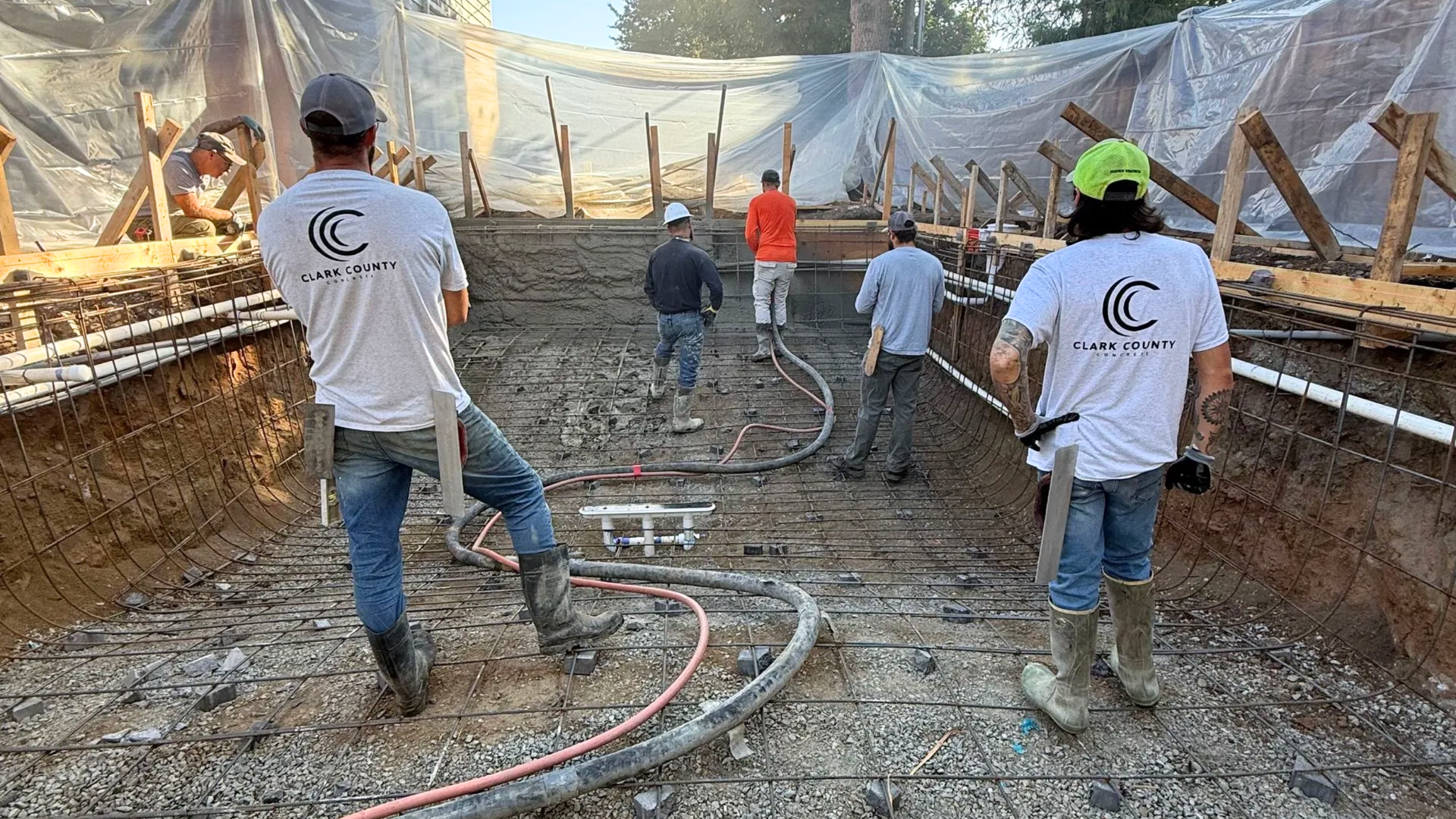
Once the paperwork and layout are set, the physical work begins. Vegetation, roots and debris come out first. Then the crew removes soil to the planned depth and shapes the grade.
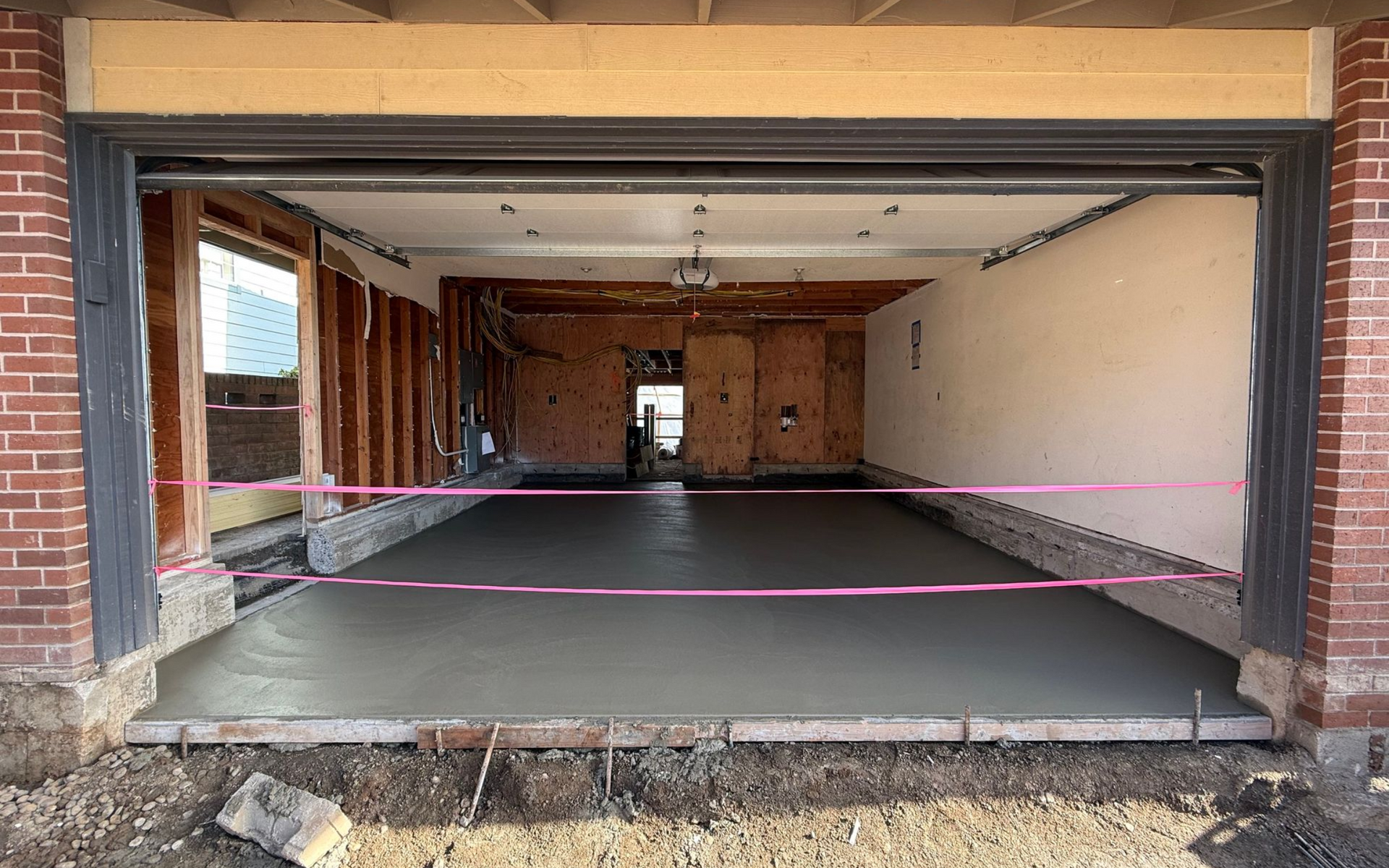
The final step is compaction. The ground gets compacted and stabilized so the slab or foundation sits on firm, even support. A last check confirms the prepared site meets the project specifications before forms go in.
Wet season rules in Clark County
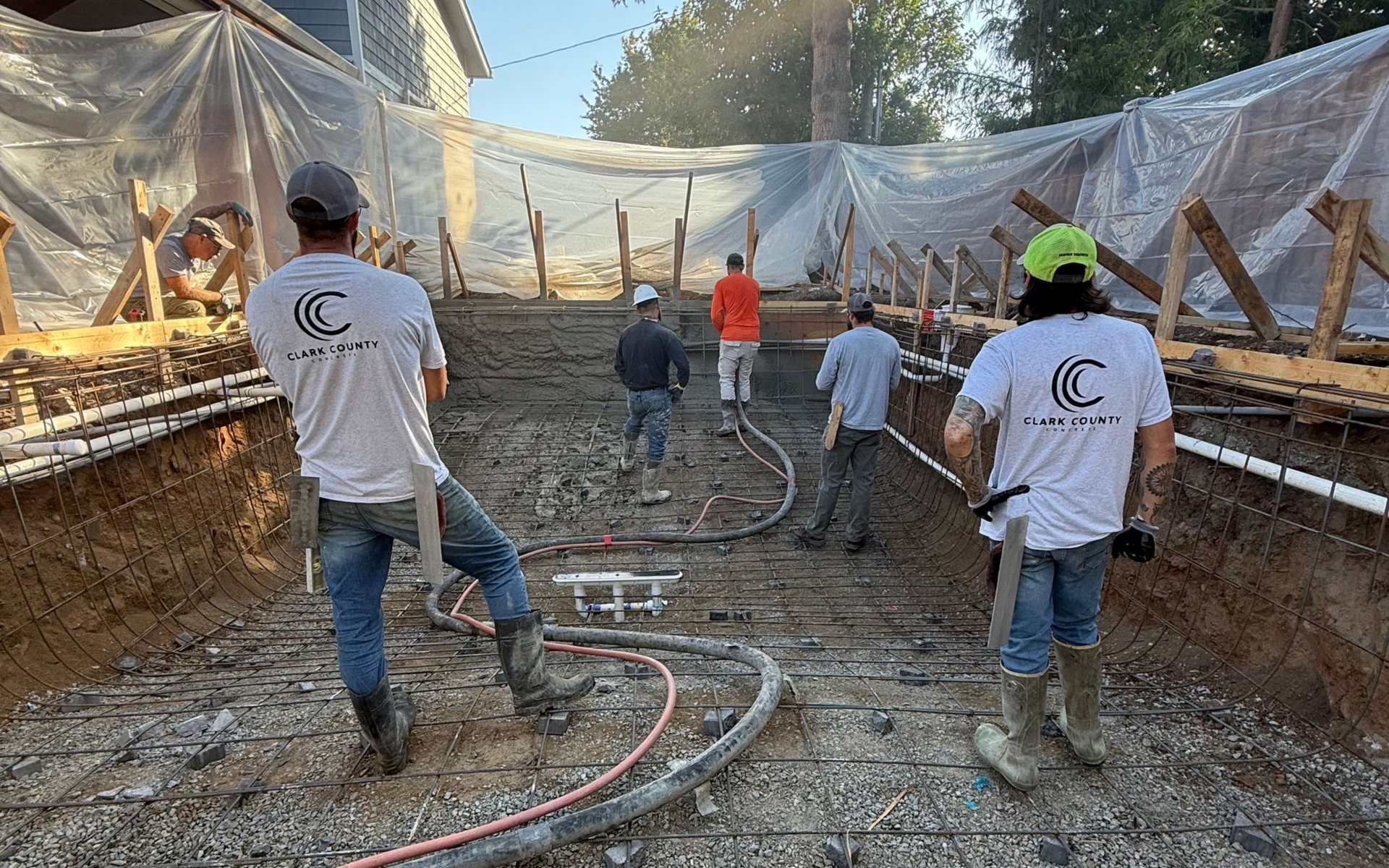
Clark County Community Development treats exposed soil differently by season. From October 1 through April, soils may not be left exposed for more than two days. From May 1 through September 30, the limit is seven days.
The Clark County erosion control rules set these limits. That rule shapes the schedule. During the wet months, crews dig only what they can cover, form or stabilize quickly. The county also requires construction access to be covered with gravel, and all land disturbing work needs a signed erosion control agreement before a building permit is issued.
Mud on the street is part of the same picture. Storm drains carry runoff straight to local creeks, so drain inlets need protection and tracked soil gets swept up. A tidy, well-protected site passes inspection faster and keeps neighbors happy.
How an ADU changes the prep
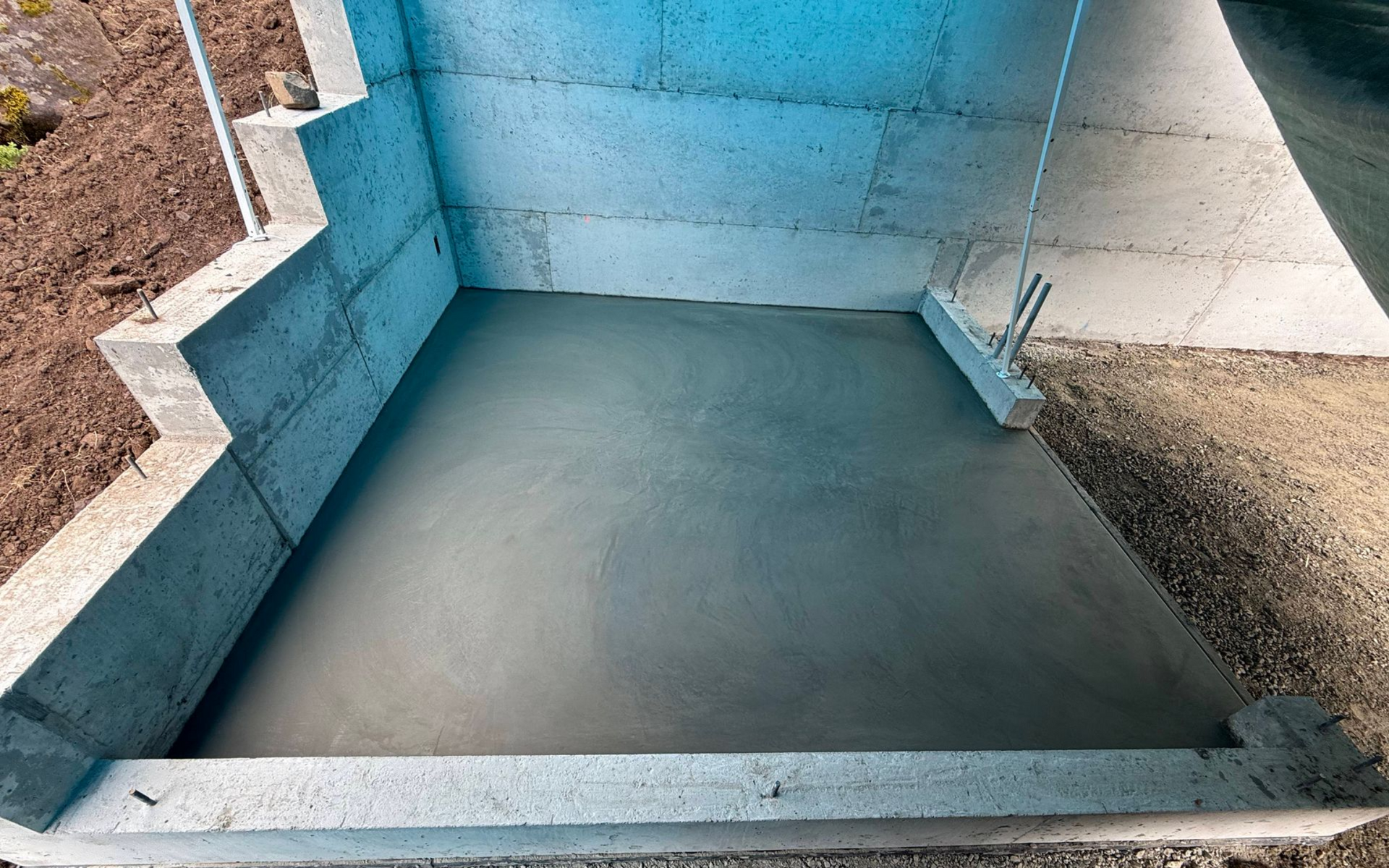
A workshop slab and an ADU foundation start with the same dirt work, but the stakes differ. An ADU carries plumbing, sewer or septic, power and water for a full living space. Every one of those lines has to be planned and placed before concrete covers the ground.
Utility capacity is part of that planning. The city notes that a new unit may need a larger power service or meter, and properties on septic may need to confirm the existing system can handle it. Those answers can change where the building sits and how deep trenches run. For shops and garages, our article on garage and shop slabs in Vancouver covers thickness, reinforcement and base layers.
Frequently asked questions
How long does excavation take for a residential slab?
Most residential excavation projects take one to three days. The size of the site and the amount of soil removal drive the timeline. Larger projects or lots with difficult access can take longer.
Can excavation work on a sloped lot?
Yes. Excavation is often used to correct elevation changes and prepare sloped land for construction. Grading creates level areas where a slab or structure can sit safely.
Do I need to be home during site prep?
You do not need to stay on site all day. It helps to be available at the start to confirm the stakes, gate access and any private lines. After that, your contractor can reach you by phone if questions come up.
Start your project on solid ground
Clark County Concrete is a licensed and insured contractor serving Vancouver, Camas, Battle Ground, Ridgefield, Washougal and La Center. We handle grading, excavation and base preparation, then pour the slab on the ground we prepared. That keeps one team responsible from the first stake to the finished surface.
Call (360) 232-6853 or request an estimate to plan your site prep.